White Paper
Predictive Biology
The intellectual foundation for a new era in biological science — where AI moves from describing life to predicting it.
01 — Definition
What Is Predictive Biology?
Predictive biology is the application of artificial intelligence to dynamic biological data in order to forecast biological outcomes — before they happen.
While traditional biology asks "what is happening?", predictive biology asks "what will happen next?" This shift from measurement to prediction requires a fundamentally new kind of data: data that captures not just the state of living systems, but their behavior over time.
At TeraCyte, we define predictive biology as the convergence of three elements: dynamic biological data, AI-ready data representations, and models trained to predict outcomes from cellular behavior rather than static molecular signatures.
02 — The Problem
Why Personalized Medicine Has Not Yet Materialized
For decades, the promise of personalized medicine has driven massive investment in genomics, proteomics, and molecular diagnostics. The premise was clear: decode the genome, understand the molecules, and medicine would become predictive and personalized.
Yet despite extraordinary advances, personalized medicine remains largely aspirational. Genomic data explains only a fraction of disease risk. Proteomic signatures capture molecular states but miss the dynamic behavior of living systems. Drug response prediction remains inconsistent.
The reason is fundamental: most biological datasets are static. They capture a single moment in time — a snapshot — of an immensely dynamic system. AI models trained on static data can classify and describe, but they cannot reliably predict outcomes in systems that are constantly changing.
03 — The Insight
Biology Is Behavior
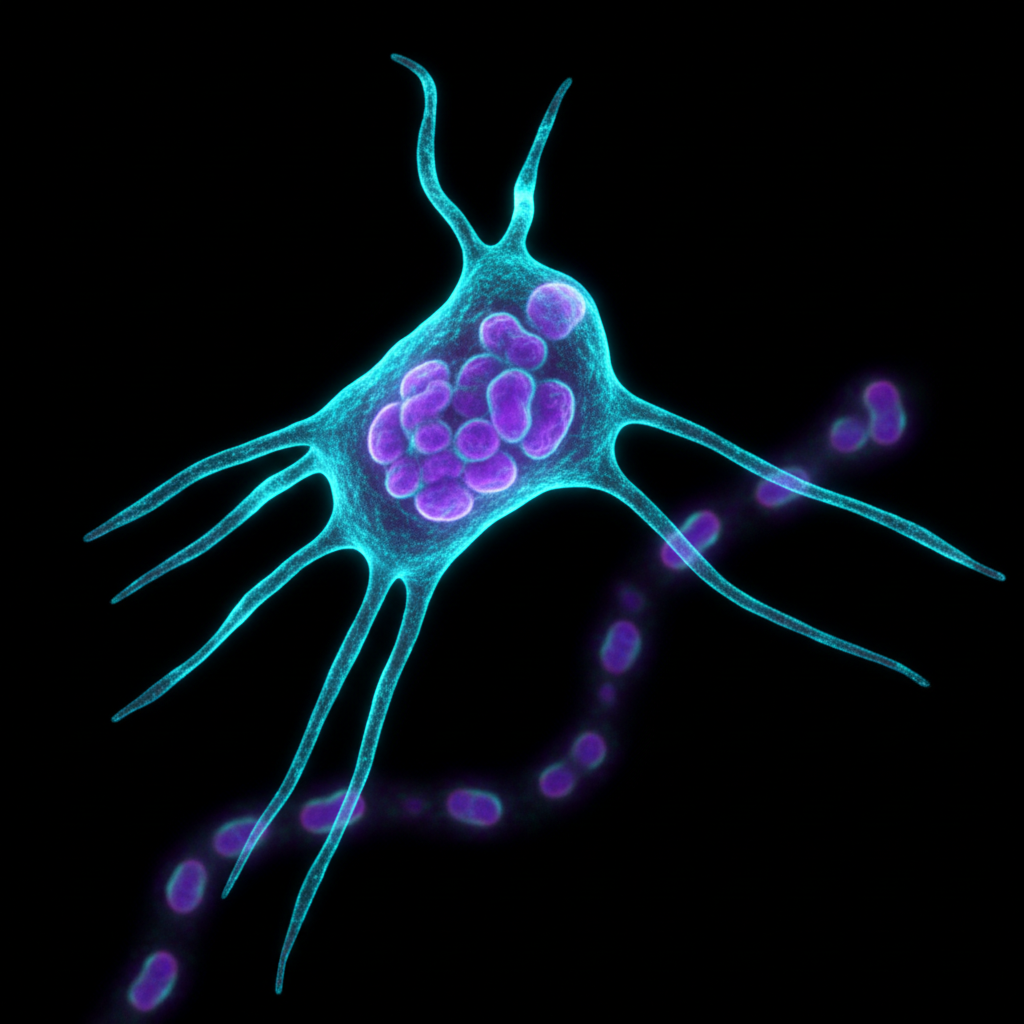
The most important biological information is not what a cell is, but what a cell does. A T-cell's fate is determined not by its molecular profile at a single moment, but by how it moves, divides, interacts, and responds over time.
Immune responses are orchestrated through complex cellular behaviors: migration patterns, activation kinetics, division timing, and exhaustion trajectories. These behaviors contain predictive information that is invisible to static measurements.
Understanding biology as behavior — rather than as molecular state — opens the door to prediction. When we observe how cells behave, we can begin to forecast what they will do next.
04 — The Gap
The Missing Data Layer
AI has transformed language, vision, and protein structure prediction. In each case, the breakthrough required the right data at scale. Language models needed text. Image models needed labeled pictures. Protein models needed structural databases.
Biology's predictive AI revolution has been held back by the absence of its foundational data layer: large-scale, dynamic, temporal data that captures how living cells behave over time.
Current biological data is overwhelmingly static — flow cytometry captures a single moment, genomic sequencing freezes a snapshot, and imaging studies typically capture individual timepoints. This data describes the "now" but not the trajectory from now to outcome.
05 — The Method
From Snapshots to Trajectories
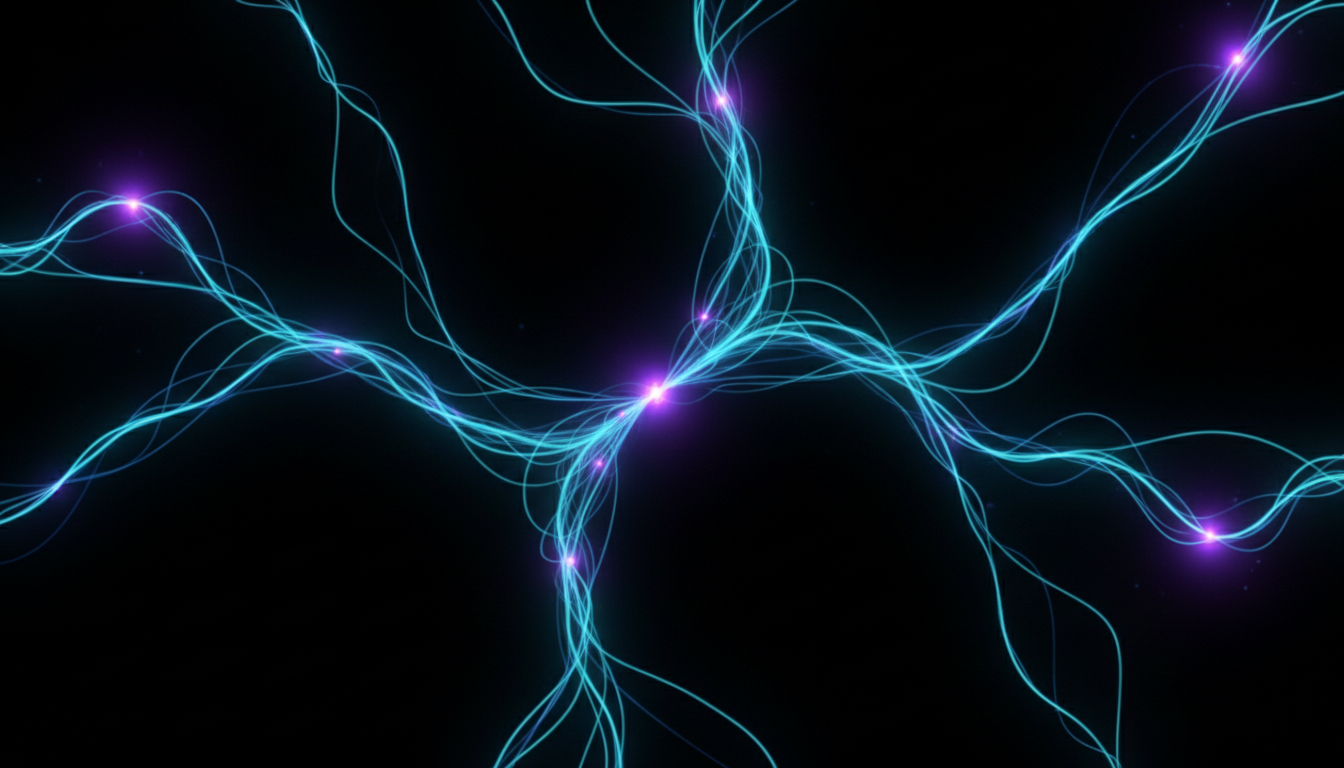
A trajectory is fundamentally different from a snapshot. Where a snapshot captures a single state, a trajectory captures the path a cell takes through time — its speed, direction, responses, and fate decisions.
TeraCyte's Temporal Cytometry™ platform continuously observes millions of living cells, tracking their morphological and functional changes over hours to days. This produces cellular trajectories: rich, temporal datasets that encode the behavioral dynamics of living systems.
These trajectories contain predictive information that is absent from any single-timepoint measurement. Just as a video contains information invisible in any single frame, cellular trajectories reveal patterns that predict future outcomes.
06 — The Innovation
BioTokens™: Making Living Biology Learnable by AI
Raw cellular trajectory data is extraordinarily rich but also extraordinarily complex. For AI to learn from this data, it must be transformed into structured, compact representations that preserve the essential behavioral information while enabling efficient model training.
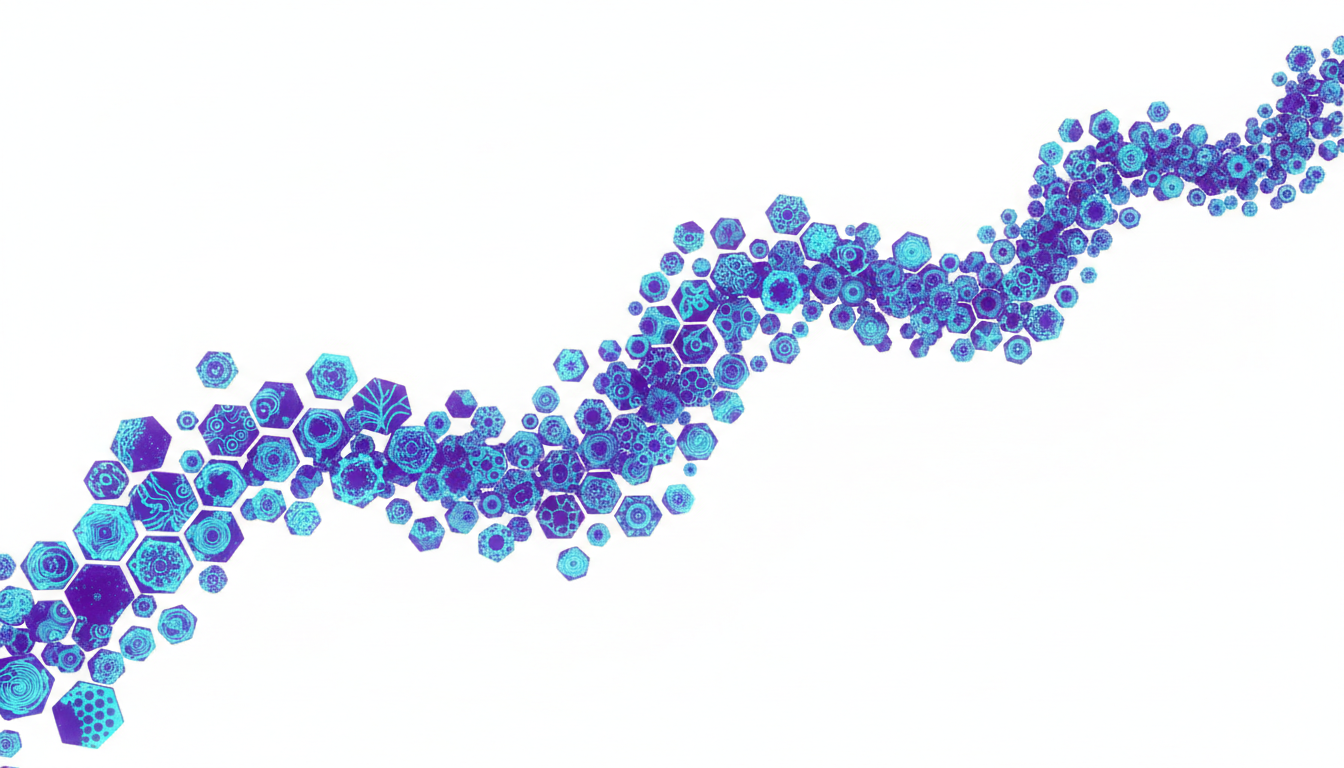
BioTokens™ are TeraCyte's solution. Just as language models learn from word tokens and image models learn from visual tokens, BioTokens encode the dynamic behavior of living cells into AI-ready representations.
Each BioToken captures how a cell or population of cells changes, responds, adapts, and evolves over time. These tokens serve as the fundamental units of a new biological language — a language that AI can learn from to predict outcomes.
07 — Applications
Applications of Predictive Biology
Immunology
The immune system is inherently dynamic. Immune cells migrate, activate, proliferate, differentiate, and exhaust over timescales of hours to weeks. Predicting immune response requires understanding these dynamic behaviors — not just molecular profiles. TeraCyte's BioToken™ dataset is anchored in immunology, where dynamic cellular behavior is most predictive.
Bioproduction
In biologics manufacturing, the performance of cell lines determines yield, potency, and quality. Early prediction of clone performance can dramatically accelerate development timelines and reduce manufacturing costs. BioTokens trained on production cell behavior enable earlier, more accurate selection.
Future Clinical Applications
As the BioToken™ platform grows, predictive biology extends to additional diseases, therapeutic areas, and cellular systems. Cancer immunotherapy response prediction, autoimmune disease monitoring, and transplant rejection forecasting all represent areas where dynamic cellular data can transform clinical decision-making.
08 — The Vision
The Future of Predictive Biology
Predictive biology represents a fundamental shift in how we understand and interact with living systems. For the first time, we can envision biology where outcomes are anticipated, therapies are optimized before administration, and biological manufacturing is guided by prediction rather than trial and error.
This future requires a new data infrastructure — one built on dynamic, temporal, behavioral data at a scale and quality that has never before existed. TeraCyte is building this infrastructure: the data layer that will power the next generation of biological AI.
The implications extend across medicine, drug development, and biomanufacturing. Predictive biology will enable physicians to anticipate therapeutic responses, researchers to design more effective therapies, and manufacturers to optimize production processes — all by learning from the dynamic behavior of living cells.